AI Overviews in France: What It Really Means for Advertisers
AI Overviews and AI Mode rolled out in France in late July 2026, but ads embedded directly inside these AI blocks aren't live there yet — only classic Search and Shopping ads appear around them. CPCs are rising and clicks are getting scarcer, pushing advertisers to target higher up the funnel instead of focusing only on bottom-funnel, transactional keywords. Automation (PMax, AI Max) should be adopted gradually, not as a full replacement for traditional Search — going all-in too fast risks losing control over performance. Tracking and data quality (a clean CRM, Consent Mode V2, server-side tracking) are becoming prerequisites for Smart Bidding to work properly. Ad performance increasingly depends on overall marketing strategy: brand awareness, content, and multichannel presence.
A new block in search results, but no ads inside it yet
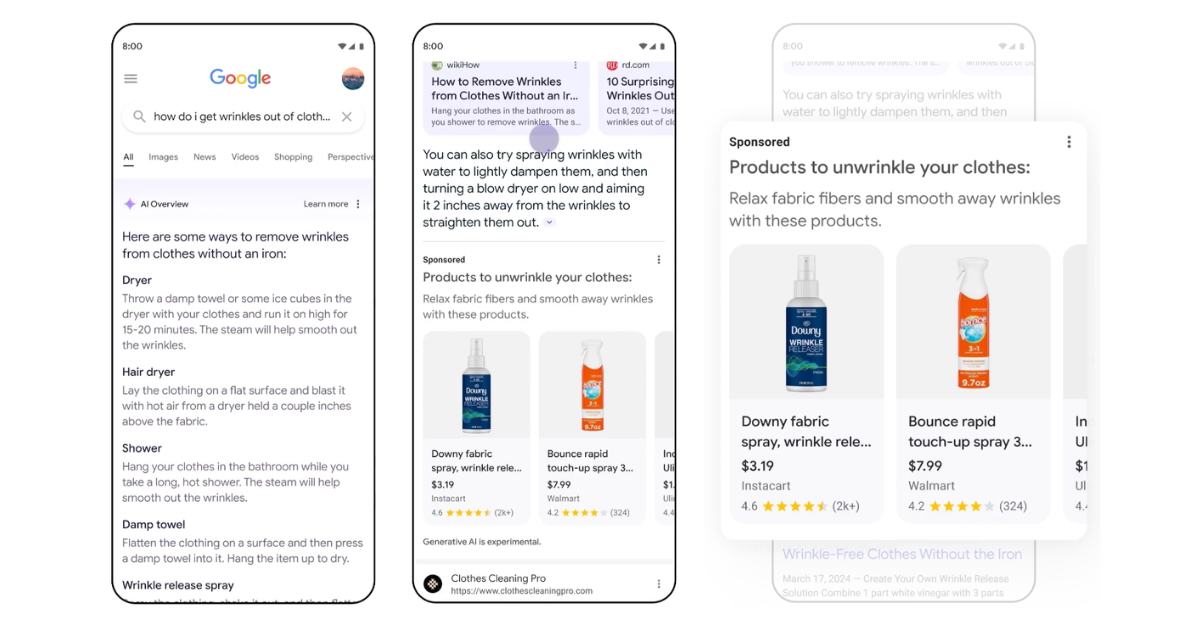
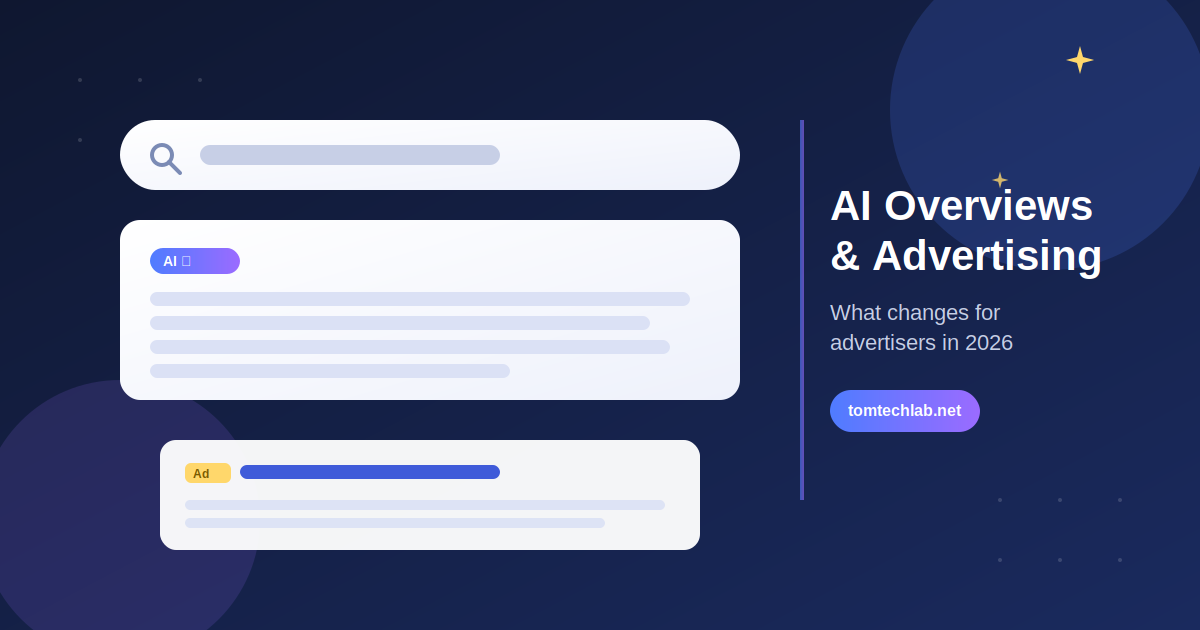
Since late July 2026, French users have started seeing AI-generated summaries (powered by Gemini) directly in search results, along with a new conversational search experience, AI Mode. For now, no ads are embedded inside these blocks in France — unlike in the US, Canada, or India, where tests are already underway. Classic Search and Shopping ads keep showing up, just repositioned around the AI summary instead of sitting at the very top of the page.
What actually changes for advertisers is the logic behind ad delivery. Keyword and bid targeting still matter, but site relevance, content quality, and the signals sent to Google (audience data, tracking) now carry more weight. Control over delivery is also decreasing: it's becoming harder to pinpoint exactly what triggers — or blocks — an ad from showing.
[Suggested image: a simple diagram showing where classic ads sit above/below an AI block — easy to build as an infographic in Canva or Figma]
Clicks are getting rarer: rethinking CPC-based bidding
Some queries are already fully answered inside the AI summary, with no click required at all. This isn't entirely new — the cost of transactional keyword clicks was already climbing before AI — but the trend is accelerating. AI Overviews tend to trigger more on informational queries, which pushes advertisers to invest higher up the funnel: on consideration-stage searches, not just ready-to-buy ones.
Bidding purely on cost-per-click no longer makes much sense. The key metric becomes qualified conversions: a higher CPC isn't a problem in itself, as long as it stays correlated with a real increase in business results (qualified leads, sales).
Automation: a balance to strike, not a switch to flip
Only certain campaign types are eligible to show up in AI environments, which nudges advertisers toward automated formats like Performance Max or AI Max. The early days of Performance Max are a useful cautionary tale: accounts that went all-in too fast, without a testing phase, often saw acquisition costs spike and performance become unpredictable.
The better approach is to keep a solid base of traditional Search campaigns — to capture buying intent right when it shows up — while gradually testing automated formats to explore new volume. Switching entirely to automation means giving up control over a meaningful part of your acquisition strategy.
[Suggested image: a bar chart showing a balanced budget split between classic Search and automated campaigns]
Data becomes the real battleground
As attribution gets fuzzier, tracking quality becomes a priority. Two workstreams stand out:
A clean, connected CRM that can feed lead status (marketing-qualified, sales-qualified, closed deal) back into the ad platform, so automated bidding algorithms have the right signals to optimize against.
A solid technical foundation: advanced conversion tracking, GDPR-compliant consent management, and server-side measurement to reduce reliance on cookies.
Without reliable data, Smart Bidding algorithms optimize on the wrong signals — potentially bringing in volume, but not the right customers.
Preparing without rushing
A few practical steps for advertisers looking to get ahead of this shift:
Move gradually toward more automated formats, without abandoning Search on high-intent, ready-to-buy queries.
Adopt a full-funnel approach: don't wait for customers to type the perfect query — show up at every stage of their thinking (Search, Shopping, Discover, YouTube, Display).
Enrich your site's content so it's easier for generative engines to understand and surface: clear value propositions, detailed FAQs, information-rich pages.
Avoid common mistakes: going all-in on automation overnight, neglecting tracking, or pouring most of the budget into bottom-funnel targeting where competition keeps intensifying.
The comeback of broader marketing
Ironically, this shift toward more AI in search puts "traditional" marketing back at the center. Brand awareness, multichannel presence, PR, and content strategy directly influence how relevant algorithms perceive you — and therefore your ad performance. Companies relying solely on buying Google traffic, without a broader brand strategy, risk seeing acquisition costs climb with little to show for it.